Lalibela
Lalibela, situated in the Amhara region of northern Ethiopia, is a remarkable destination renowned for its extraordinary rock-hewn churches, which constitute one of the world’s most awe-inspiring architectural wonders. These churches, hewn directly from solid rock, stand as a testament to the remarkable craftsmanship and spiritual devotion of their creators.
The story of Lalibela is intertwined with the reign of King Lalibela himself, who ruled Ethiopia during the Zagwe dynasty in the 12th century. Legend has it that Lalibela received divine inspiration to construct a “New Jerusalem” in Ethiopia after the capture of Jerusalem by Muslim forces, which hindered Christian pilgrimage to the Holy Land. Thus, he embarked on an ambitious project to create a sacred pilgrimage site that would rival the splendor of Jerusalem.
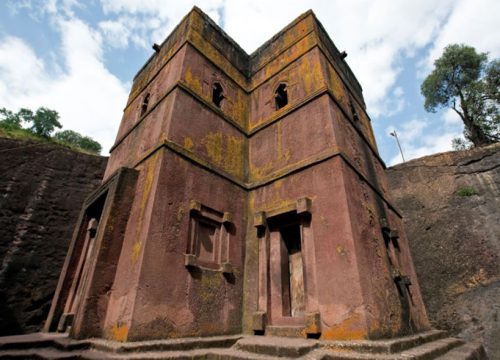
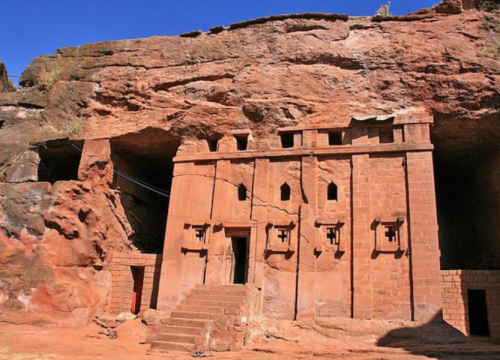
Over the course of several decades, Lalibela oversaw the construction of a series of rock-hewn churches, meticulously carved into the rugged landscape surrounding the town. These churches, numbering around 11 in total, are collectively known as the “Rock-Hewn Churches of Lalibela.” Each church is a masterpiece of architectural ingenuity, featuring intricate carvings, elaborate facades, and finely crafted interiors adorned with vibrant frescoes and religious artifacts.
Among the most renowned churches in Lalibela are:
Bet Maryam (House of Mary): Believed to be the oldest of the Lalibela churches, Bet Maryam is dedicated to the Virgin Mary and is characterized by its cruciform shape and finely carved details.
Bet Golgotha (House of Golgotha): This church is known for its symbolic representation of Golgotha, the site of Jesus’ crucifixion, and features a rock-cut replica of the Tomb of Christ.
Bet Medhane Alem (House of the Saviour of the World): Considered one of the largest monolithic churches in the world, Bet Medhane Alem is an impressive structure featuring intricate carvings and towering pillars.
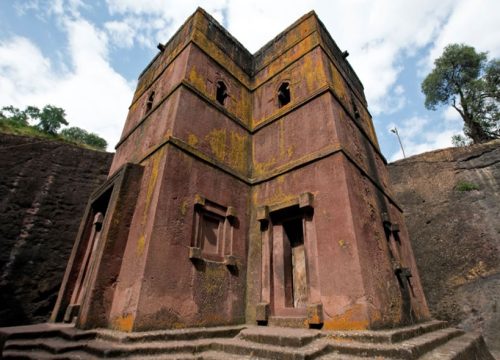
Bet Giyorgis (House of Saint George): Perhaps the most iconic of the Lalibela churches, Bet Giyorgis is carved in the shape of a cross and dedicated to Saint George, Ethiopia’s patron saint.
These churches, along with the others in Lalibela, continue to serve as active places of worship for Ethiopian Orthodox Christians and are integral to the religious and cultural heritage of the region. The site of Lalibela has been recognized as a UNESCO World Heritage Site, drawing pilgrims, historians, and tourists from around the globe who come to marvel at its spiritual significance and architectural brilliance.